
Food poisoning cases in St. Cloud, Minnesota, can cause serious health problems and big financial losses for victims. Many people don’t know they may get compensation when bad food makes them sick. Minnesota law gives several ways to pursue compensation when careless food preparation or bad products harm consumers.
Food poisoning happens when bad food or drinks make consumers sick. In Minnesota, these cases may be brought under product liability law (because food is considered a product) or under negligence law (if improper handling or preparation is proven).
Types of Food Poisoning Incidents
Food poisoning compensation claims in St. Cloud often stem from a variety of places and situations where safety standards break down. Some of the most common types of incidents include:
- Restaurant-related incidents: Restaurants may be liable if they fail to uphold food safety standards. This includes poor kitchen hygiene, inadequate staff training, improper food storage or temperature control, cross-contamination between raw and cooked foods, failure to follow food safety rules, and poor cleaning or sanitization procedures.
- Grocery store incidents: Grocery stores may face responsibility when contaminated products are sold to the public. These cases can affect dozens or even hundreds of consumers across multiple locations, and widespread contamination often leads to product recalls.
- Catered events and large gatherings: Caterers and event organizers may be held liable when contaminated food is served at weddings, corporate functions, or community festivals. Because many people can be exposed at once, these large-scale outbreaks are often easier to prove in court.
Food poisoning can arise in restaurants, grocery stores, or catered events, and each type of case carries unique risks.
Proving Your Food Poisoning Case
Linking your illness directly to contaminated food is the foundation of a strong food poisoning claim. Medical treatment and solid documentation provide the evidence needed to hold negligent parties accountable.
Key steps to take include:
- Seek immediate medical care: Records and lab tests that identify bacteria or toxins provide critical proof.
- Track official data: Public health outbreak reports can help connect your illness to a larger incident.
- Save purchase evidence: Keep receipts from restaurants, grocery stores, or events where food was bought.
- Document everything: Photograph spoiled food, log symptoms, and record all treatments and expenses.
- Gather witness details: Collect contact information from others who became sick after eating the same food.
By combining medical records, documentation, and testimony from other victims, you can create a compelling case.
Who Can Be Held Liable?
Food poisoning cases are often complex because contamination can occur at multiple points in the food supply chain. Depending on where the breakdown happens, several different parties may be held responsible:
- Restaurant owners: May be liable if they fail to uphold food safety standards. This includes not maintaining proper cooking and storage temperatures, providing poor staff training, ignoring kitchen hygiene, mishandling food storage and inventory, or failing to comply with health department regulations.
- Food suppliers and distributors: Can bear responsibility when contaminated ingredients are provided to restaurants or stores. These companies are required to test products, maintain safe storage, and follow strict transport protocols to prevent contamination.
- Grocery stores: May be accountable for selling unsafe food products to consumers. Their obligations include checking expiration dates, storing products at correct temperatures, and quickly removing recalled items from shelves.
- Equipment manufacturers: May face liability if defective refrigeration or cooking equipment leads to food contamination, since faulty tools can directly contribute to unsafe food conditions.
Liability for food poisoning can extend far beyond the restaurant that served the meal. From suppliers to stores and even equipment manufacturers, each link in the chain has strict responsibilities to protect consumers.
Damages Available in Food Poisoning Cases
Food poisoning victims may be entitled to different types of compensation based on the severity of their illness and the lasting effects it has on their lives. Common categories of damages include:
- Medical expenses: Victims can recover costs for emergency room visits, urgent care treatment, diagnostic tests such as blood work and stool samples, prescription medications, hospitalization for severe cases, and ongoing treatment or follow-up care for complications.
- Lost wages: Many victims are unable to work while recovering from food poisoning. Compensation may cover lost income, with documentation from employers and medical professionals supporting the claim. Self-employed individuals can also pursue compensation, but may need additional evidence to prove financial losses.
- Pain and suffering: These damages recognize the physical discomfort and emotional distress caused by food poisoning. Severe cases can lead to debilitating symptoms that impact daily life, and compensation for pain and suffering often forms a substantial portion of settlements.
- Long-term health complications: In some cases, food poisoning results in lasting medical issues, such as chronic digestive disorders, kidney damage, or other ongoing health conditions. Victims can pursue damages to address these long-term effects.
The damages available in food poisoning cases go beyond medical bills, often including lost income, emotional suffering, and even long-term health complications.
The Legal Process in Minnesota
In Minnesota, most food poisoning claims fall under the state’s two-year statute of limitations for personal injury. This period usually begins when you knew or should have known that contaminated food caused your illness.
Why Professional Legal Representation Matters
Food poisoning cases involve complex medical and legal issues that require specialized knowledge. Insurance companies often dispute the connection between bad food and resulting illnesses. Experienced attorneys understand how to gather evidence and present compelling arguments for compensation.
If you need help after experiencing food poisoning in St. Cloud, MN, contact Hall Law Personal Injury Attorneys to schedule a free consultation.
Contact the Minnesota Personal Injury Law Firm of Hall Law Personal Injury Attorneys For Help Today
For more information, please contact an experienced personal injury lawyer at Hall Law Personal Injury Attorneys to schedule a free initial consultation today. We have three convenient locations in Minnesota, including Minneapolis, St. Cloud, and Edina.
We proudly serve Hennepin County, Stearns County, and its surrounding areas:
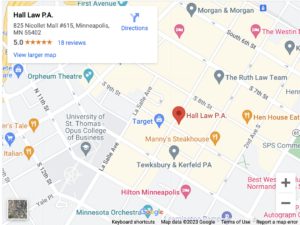
Hall Law Personal Injury Attorneys – Minneapolis
825 Nicollet Mall, Suite 615
Minneapolis, MN 55402
(800) 292-1979
Find us with our GeoCoordinates: 44.97514068188609, -93.27349979814521
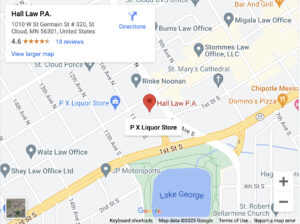
Hall Law Personal Injury Attorneys – St. Cloud
1010 W St Germain St # 320
St Cloud, MN 56301
(320) 255-1000
Find us with our GeoCoordinates: 45.55903612908877, -94.16420517306956
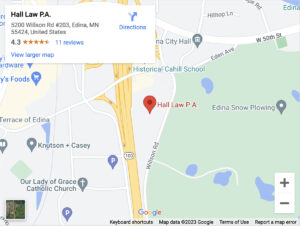
Hall Law Personal Injury Attorneys – Edina
5200 Willson Rd #203
Edina, MN 55424
(952) 697-5560
Find us with our GeoCoordinates: 44.90963991439301, -93.34937342327198